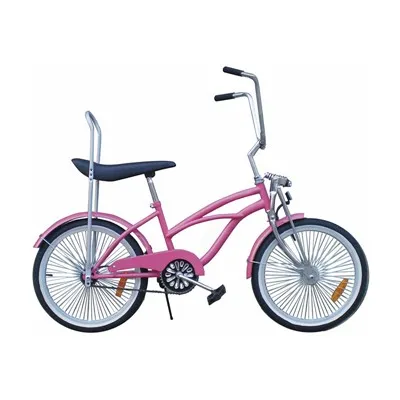
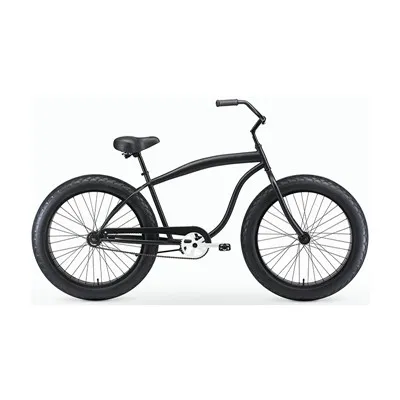
The technical parameters of mountain bikes mainly include wheel diameter, speed, frame material, front fork type and brake system.
Wheel diameter
There are three main specifications for mountain bike wheel diameters: 26 inches, 27.5 inches (650b) and 29 inches (29er). 26 inches is the most traditional wheel diameter, suitable for various riding needs, including daily commuting and mountain adventures. The 27.5-inch wheel diameter is between 26 inches and 29 inches, taking into account both controllability and passability, and is suitable for Asian body shapes. Although the 29-inch wheel diameter has strong grip, it is heavy and has slightly poor acceleration and control performance.
Speed
The speed of a mountain bike refers to the number of toothed discs and flywheels in the gearshift kit, and the common ones are 21 speeds, 24 speeds and 27 speeds. The higher the speed, the more transmission ratios the gearshift kit provides, and the stronger the ability to adapt to different road conditions. For example, the maximum transmission ratio of 21 speed is 3.43, and the minimum transmission ratio is 1; while the maximum transmission ratio of 27 speed can reach 4, which can adapt to more complex road conditions.
Frame material
The frame materials of mountain bikes are mainly carbon fiber, aluminum alloy, titanium alloy and high carbon steel. Carbon fiber frame is light and rigid, but it is expensive and easy to break; aluminum alloy frame is light and not easy to rust, but the elasticity and toughness are slightly worse; titanium alloy frame is also light and rigid, but it needs to be customized and welded; high carbon steel frame is durable and cheap, but it is heavy and easy to rust.
Front fork type
The front fork type affects the riding experience, mainly including spring front fork, oil spring front fork, air front fork and hard fork. Spring front fork is affordable but the shock absorption effect is average; oil spring front fork has good shock absorption effect and locking function, but it is heavy; air front fork is light and easy to maintain, but it needs regular maintenance; hard fork is light but has no shock absorption effect and is cheap.
Brake system
The brake system is related to riding safety, and mainly includes cable-operated disc brakes, cable-operated hydraulic disc brakes, and hydraulic disc brakes. Cable-operated disc brakes are stable in rainy days and are affordable, but the braking distance is longer; cable-operated hydraulic disc brakes have stable performance and double-sided discs, but require regular addition of mineral oil; hydraulic disc brakes have excellent performance and do not require force, but are more expensive and require regular maintenance; U-shaped rim brakes have a simple structure and are easy to maintain, but are prone to rim burn in rainy days.